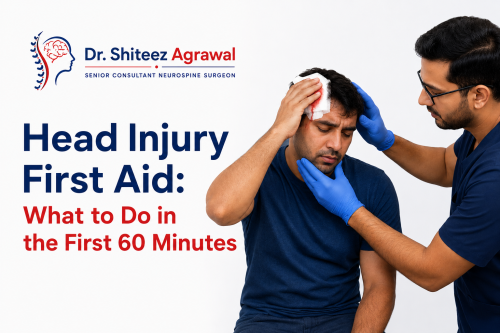
Head injuries are one of the leading causes of disability and death worldwide. Knowing how to respond in the critical minutes following a head injury can save lives. This guide provides essential first-aid knowledge that every person should have.
Types of Head Injuries
Head injuries range from mild to severe:
- Concussion: A mild traumatic brain injury caused by a bump, blow, or jolt to the head
- Contusion: A bruise on the brain caused by direct impact
- Skull fracture: A break in the skull bone
- Intracranial haemorrhage: Bleeding inside the skull — a medical emergency
Red Flag Symptoms — Rush to Emergency
Call an ambulance immediately or rush to the nearest hospital if the person shows any of these symptoms:
- Loss of consciousness — even briefly
- Confusion or disorientation
- Repeated vomiting
- Seizures
- Clear fluid or blood leaking from the nose or ears
- Unequal pupil size
- Weakness on one side of the body
- Severe headache that worsens
- Slurred speech
- Difficulty waking up
Immediate First Aid Steps
Step 1: Ensure Safety
Make sure the area is safe for you and the injured person. Do not move them unless they are in immediate danger.
Step 2: Call for Help
Call emergency services (108 or 112 in India) immediately for any serious head injury.
Step 3: Check Responsiveness
Gently tap the person and ask “Can you hear me?” If unconscious but breathing, place them in the recovery position (on their side) to prevent choking.
Step 4: Control Bleeding
Apply firm pressure with a clean cloth to any scalp wound. Do NOT press on the wound if you suspect a skull fracture.
Step 5: Keep Still
Do not allow the person to move their head or neck. Stabilize the head and neck in the position found, especially if you suspect a spine injury.
Step 6: Monitor
Stay with the person and monitor their breathing and consciousness until help arrives. Note the time of injury and any changes in condition.
The “Golden Hour” in Head Injury
In neurosurgery, we refer to the first 60 minutes after a severe head injury as the “Golden Hour.” Getting the patient to a hospital with neurosurgical facilities within this window dramatically improves survival and recovery outcomes. Every minute counts.
The difference between a good outcome and a devastating one often comes down to how quickly the patient receives appropriate medical care. Know your nearest trauma centre and don’t hesitate to call for emergency help.
What NOT to Do
- Do NOT give food, water, or medication to the injured person
- Do NOT remove any object embedded in the head
- Do NOT move the person unless absolutely necessary
- Do NOT assume the injury is minor — even a “mild” bump can cause internal bleeding
- Do NOT let the person fall asleep if they appear drowsy after a head injury — seek medical evaluation first
Prevention is Key
- Always wear a helmet while riding two-wheelers
- Use seatbelts in cars — every time, every trip
- Install safety gates for young children at home
- Use non-slip mats in bathrooms for elderly family members
- Follow safety protocols at construction sites and workplaces
Knowing basic first aid for head injuries can make you a lifesaver. Share this information with your family and friends — you never know when this knowledge might be needed.