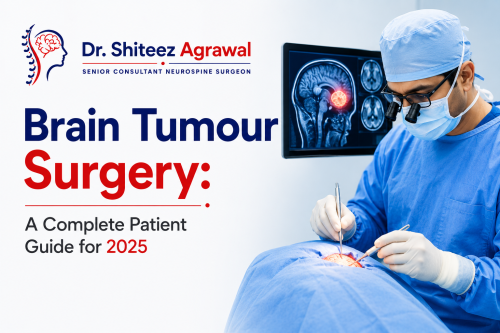
Brain tumours can be a frightening diagnosis for patients and their families. However, with advances in neurosurgical techniques and diagnostic imaging, outcomes have improved significantly over the past decade. This comprehensive guide covers everything you need to know about brain tumour surgery — from initial diagnosis to recovery.
What is a Brain Tumour?
A brain tumour is an abnormal growth of cells within the brain or the central spinal canal. Brain tumours can be benign (non-cancerous) or malignant (cancerous). Even benign tumours can cause significant health problems by pressing on critical areas of the brain.
Early detection and timely surgical intervention are key factors in achieving the best outcomes for brain tumour patients. Modern neurosurgical techniques allow us to remove tumours with minimal impact on surrounding healthy tissue.
Common Symptoms to Watch For
Brain tumour symptoms vary depending on the tumour’s location, size, and rate of growth. Some common signs include:
- Persistent headaches that worsen over time, especially in the morning
- Seizures — particularly new-onset seizures in adults
- Vision changes — blurred vision, double vision, or loss of peripheral vision
- Speech difficulties — trouble finding words or understanding speech
- Balance and coordination problems
- Personality or behavioural changes
- Nausea and vomiting — especially in the morning
- Weakness or numbness in one side of the body
Diagnostic Procedures
When a brain tumour is suspected, several diagnostic tests are performed:
MRI (Magnetic Resonance Imaging)
MRI is the gold standard for brain tumour imaging. It provides detailed 3D images of the brain, helping surgeons identify the exact location, size, and characteristics of the tumour.
CT Scan
A CT scan uses X-rays to create cross-sectional images of the brain. It’s often the first test done in emergency situations and is particularly useful for detecting bleeding or calcium deposits.
Biopsy
In some cases, a tissue sample may be taken to determine the exact type and grade of the tumour, which helps guide treatment decisions.
Surgical Approaches
Modern neurosurgery offers several approaches depending on the tumour type and location:
Craniotomy
The most common approach, where a section of the skull is temporarily removed to access the tumour. With microsurgical techniques, surgeons can remove tumours with great precision while preserving healthy brain tissue.
Endoscopic Surgery
Minimally invasive technique using a thin tube with a camera, inserted through a small opening. Ideal for tumours located deep within the brain or near the ventricles.
Awake Craniotomy
For tumours located near critical brain areas controlling speech or movement, the patient may be kept awake during surgery. This allows real-time monitoring of brain function during tumour removal.
Recovery After Brain Tumour Surgery
Recovery time varies depending on the complexity of the surgery and the patient’s overall health. Most patients spend 3-7 days in the hospital after surgery. Key recovery milestones include:
- First 24-48 hours: Close monitoring in the ICU, neurological assessments every few hours
- Days 3-7: Gradual mobilization, starting with sitting up and short walks
- Weeks 2-6: Gradual return to daily activities, physical therapy if needed
- Months 2-6: Full recovery for most patients, with follow-up MRI scans
Why Choose Apex Hospital for Brain Tumour Surgery?
At Apex Hospital, Malviya Nagar, Jaipur, we offer state-of-the-art neurosurgical facilities including:
- Advanced neuro-navigation systems for precise tumour localization
- High-powered surgical microscopes with fluorescence guidance
- Intraoperative neurophysiological monitoring
- Dedicated neuro-ICU with 24/7 specialist coverage
- Comprehensive rehabilitation services
If you or a loved one has been diagnosed with a brain tumour, don’t hesitate to reach out for a consultation. Early intervention can make a significant difference in outcomes.